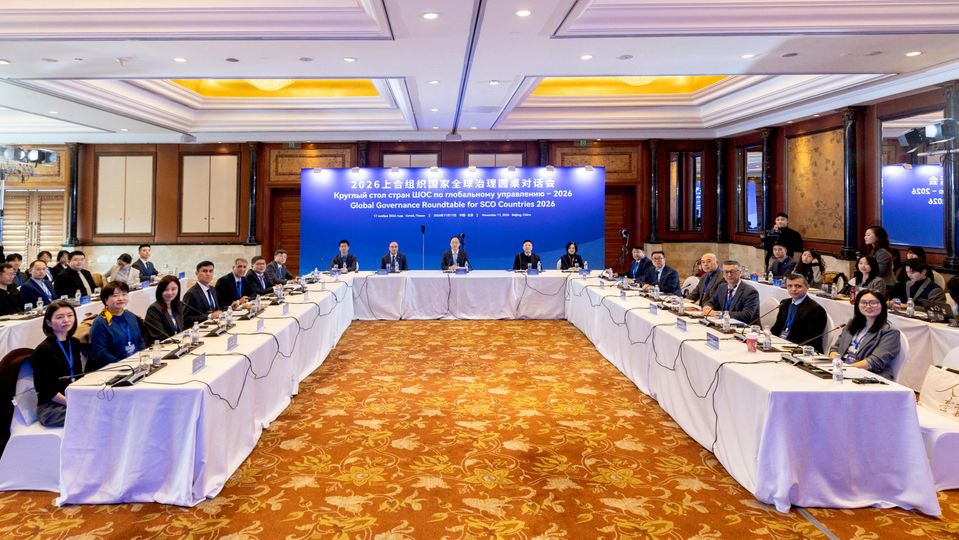
On 17 November 2026, a round table on global governance for the countries of the Shanghai Cooperation Organisation was held in Beijing. The event was organized by the China Foreign Languages Publishing Administration, the SCO Secretariat and the China Institute of International Studies.
The meeting was attended by representatives of government agencies, diplomatic missions and think tanks of the SCO member states.
The opening ceremony was addressed by Yu Yunquan, Deputy Director of the China Foreign Languages Publishing Administration; Batyr Tursunov, Deputy Secretary-General of the SCO; Chen Daiwen, Counsellor of the Department of European-Central Asian Affairs of the Ministry of Foreign Affairs of China; Liu Qing, Vice President of the China Institute of International Studies; and other senior officials.
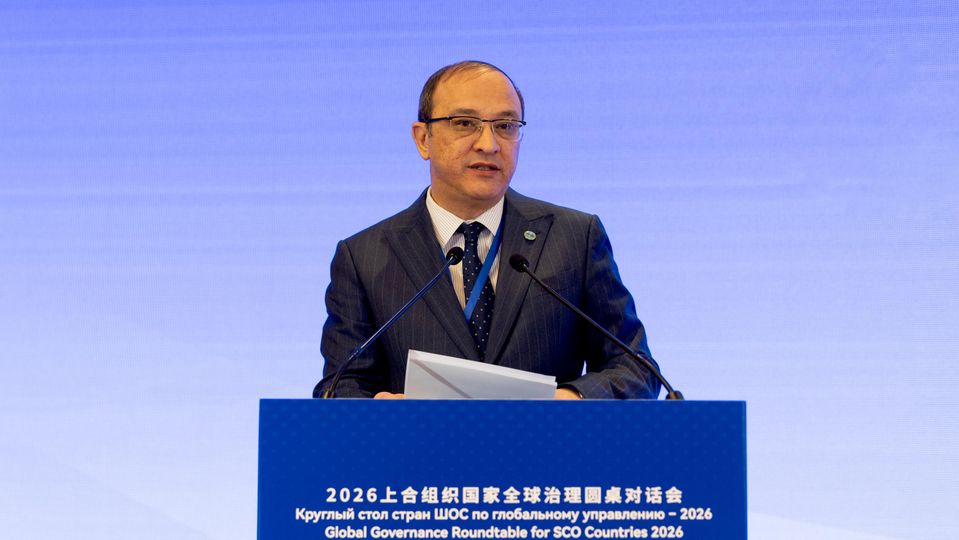
The SCO Deputy Secretary-General emphasized that during the Organisation's Tianjin Summit in September 2025, President of the People's Republic of China Xi Jinping put forward the Global Governance Initiative. Its content is in line with the principles of the “Shanghai Spirit”, and the Initiative has received a broad response from the international community.
Batyr Tursunov informed the participants about the outcomes of the meeting of the SCO leaders held in Kyrgyzstan in September 2026, in particular the adoption of the Bishkek Declaration on the 25th Anniversary of the Shanghai Cooperation Organisation, which sets out the member states' positions on topical issues of the international agenda and the directions of further cooperation. The importance of the SCO's contribution to building a more representative, democratic and just multipolar world order was highlighted.
During Pakistan's SCO chairmanship in 2026–2027, held under the motto “Turning Vision into Action: Connectivity, Innovation and Shared Prosperity”, the member states will continue to be guided by the agreements reached by the heads of state.
The participants of the round table highly appreciated the role of the SCO in maintaining peace and stability, developing regional and global cooperation, and promoting the common values of humanity. They noted the importance of using the advantages of multilateral interaction to achieve practical results.