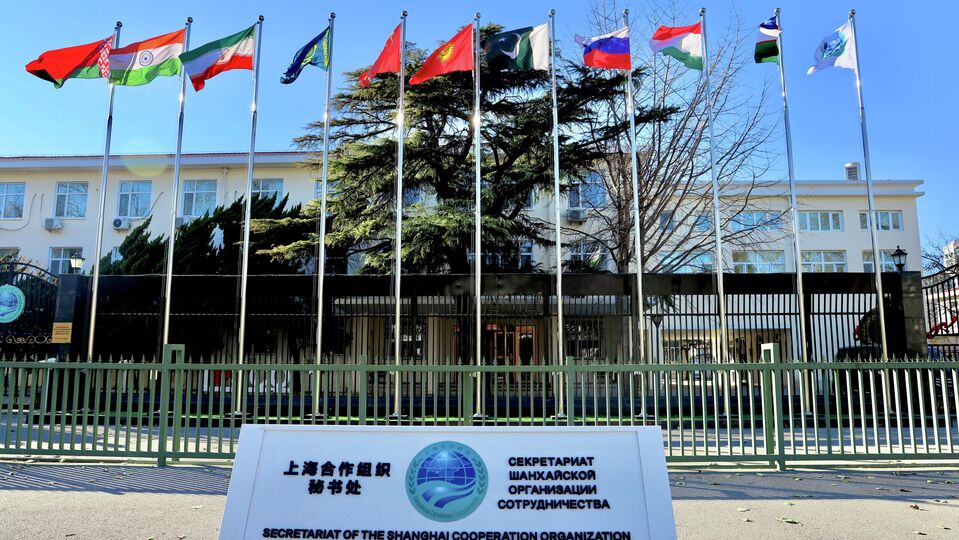
Shanghai Cooperation Organisation Secretariat in Beijing
The Shanghai Cooperation Organisation has ten member states with a combined territory of about 36 million kilometres and a population of over 3.4 billion. It represents about 25 percent of global GDP is about 25 percent and over 15 percent of international trade. The SCO countries are developing long-term relations of good-neighbourliness, friendship and cooperation in the spheres of mutual interest based on the universally recognised principles and norms of international law.
The SCO’s legal framework includes agreements on confidence-building in the military sphere and on the mutual reduction of armed forces in the border area signed between the Republic of Kazakhstan, the People’s Republic of China, the Kyrgyz Republic, the Russian Federation and the Republic of Tajikistan in 1996 and 1997. In light of the unprecedented nature of these agreements for Asia, it was decided to monitor their implementation at the highest level. The mechanism of regular meetings of the five countries’ leaders is known as the Shanghai Five.
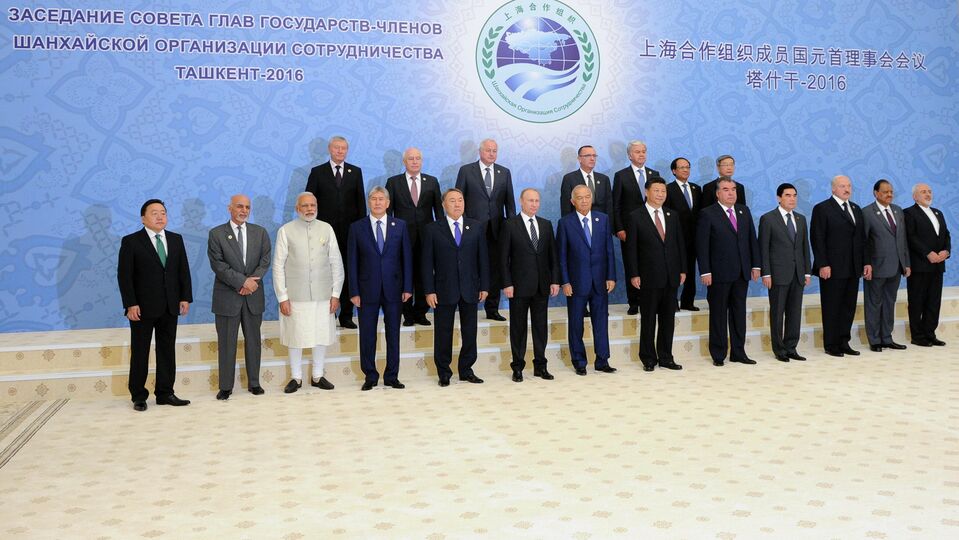
The necessity of transforming the Shanghai Five into a regional structure of multilateral cooperation in various sphere was pointed out in the Dushanbe Declaration of the heads of state of the Republic of Kazakhstan, the People’s Republic of China, the Kyrgyz Republic, the Russian Federation and the Republic of Tajikistan signed on 4 July 2000. Later that year, the Republic of Uzbekistan joined the five countries.
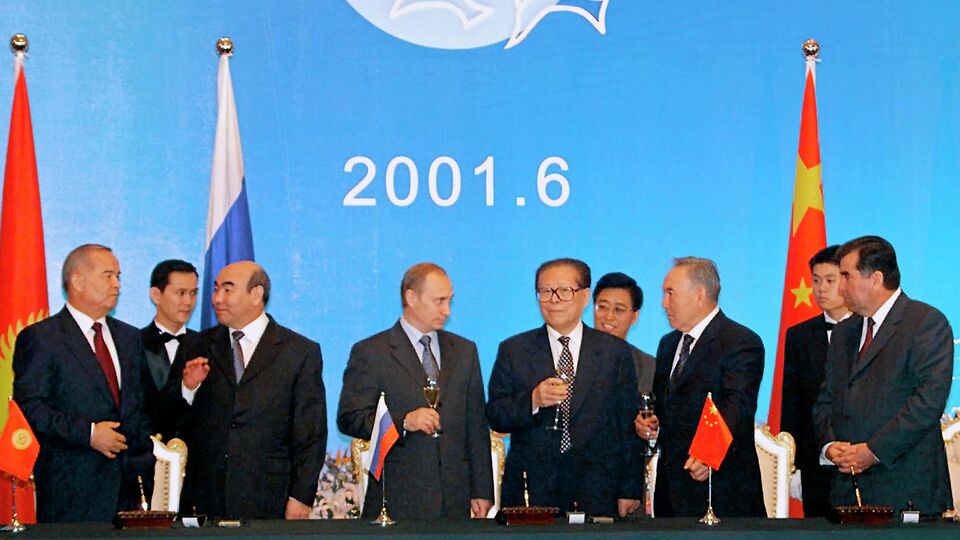
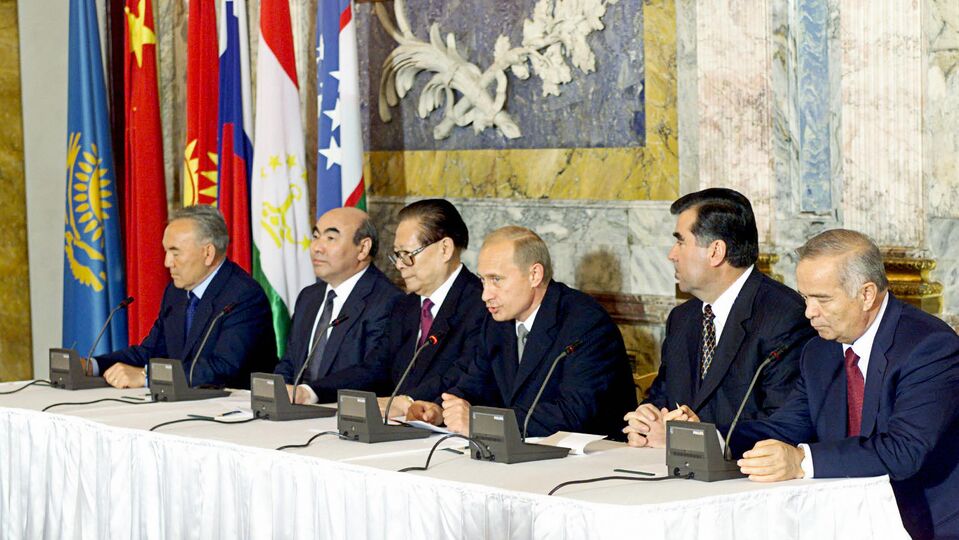
The SCO history began on 15 June 2001, when the heads of the above six countries adopted a historical decision to establish the Shanghai Cooperation Organisation at their meeting in Shanghai, China. The Declaration on the Establishment of the Shanghai Cooperation Organisation states that cooperation within the framework of the new organisation will help in making more effective use of emerging possibilities and addressing new challenges and threats amid the dynamic development of processes of political multipolarity and economic and information globalisation in the 21st century. The document emphasises that the SCO is not an alliance directed against other states and regions, that it adheres to the principle of openness, and is ready to develop dialogue, contacts and cooperation of all kinds with other states and relevant international and regional organisations.
On 7 June 2002, the SCO leaders signed the SCO Charter, the fundamental document of the organisation, at their summit in St Petersburg. It entered into force on 19 September 2003 and registered with the UN Secretariat on 1 February 2013. Overall, the SCO’s international legal framework comprises over 25 agreements and regulations, including the Convention on Privileges and Immunities of the SCO (registered with the UN Secretariat on 4 January 2010), the Agreement on the Procedure for the Formation and Execution of the SCO Budget, the Agreement on Regional Anti-Terrorist Structure (signed simultaneously with the SCO Charter), and regulations on SCO bodies and personnel, as well as financial regulations and rules.
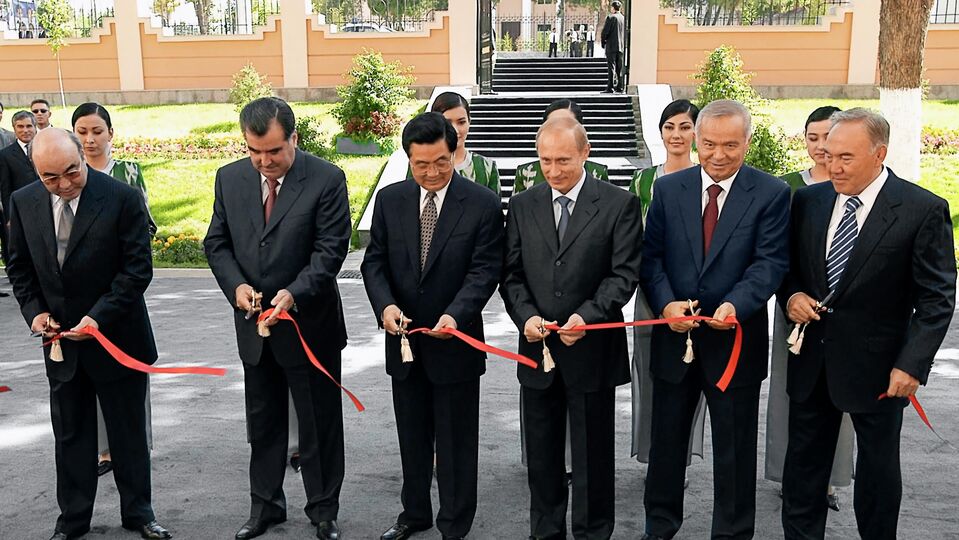
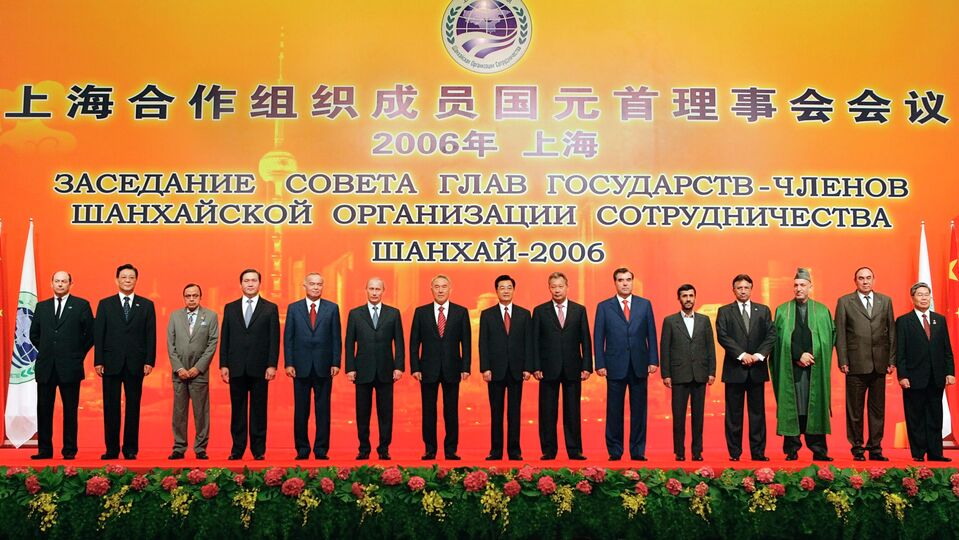
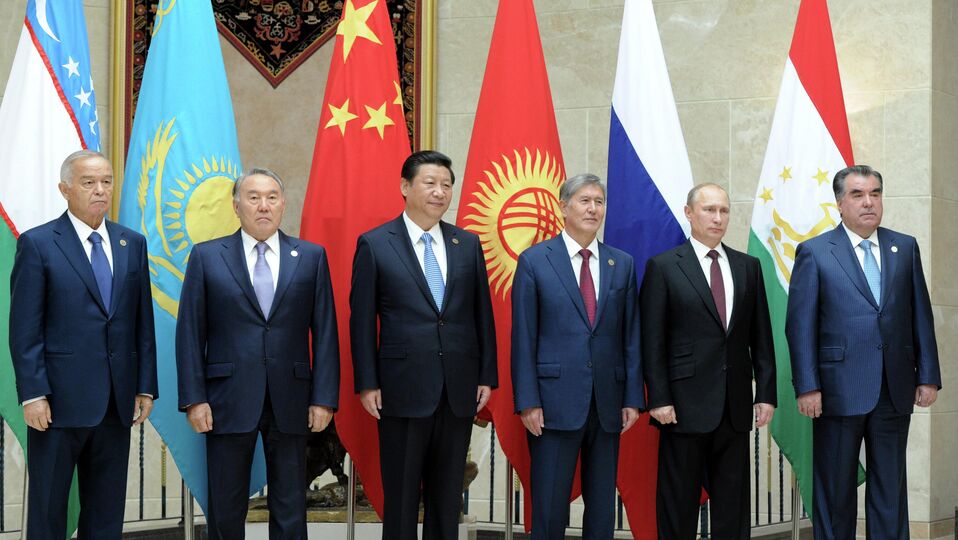
Heads of SCO member states in Shanghai, 2001. Photo by Sergey Velichkin/Sputnik
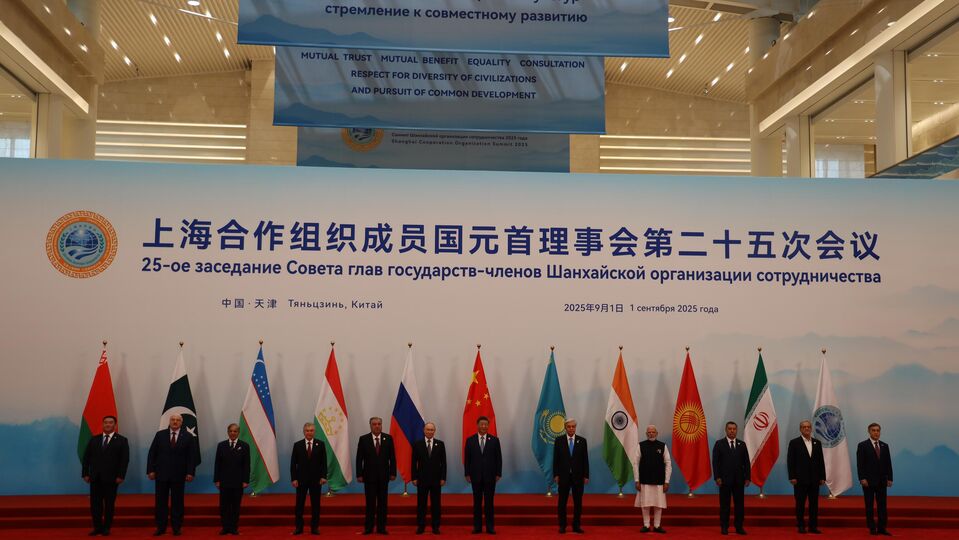
The 25th meeting of the SCO Council of Heads of State in Tianjin, 2025
/ 14
Main goals:
- strengthen mutual trust, friendship and good-neighbourliness;
- promote multilateral interaction to maintain and ensure peace, security and stability in the region;
- jointly address new challenges and threats;
- encourage effective and mutually beneficial cooperation in various spheres;
- promote economic growth and social and cultural development.
The SCO’s activities are based on the principles of mutual respect for sovereignty, independence, territorial integrity of states and inviolability of state borders, non-aggression, non-interference in internal affairs, non-use or threat of use of force in international relations, and renunciation of unilateral military superiority in neighbouring areas, which has become known on the international political stage as the Shanghai Spirit.
The SCO does not have the attributes of a defence alliance.
The organisation has established cooperation with the UN and its specialised bodies, as well as with the CIS, CSTO, ASEAN, ECO, CICA, EEC, LAS, ICRC and other international organisations and associations.
The SCO has 29 charter bodies, including the Council of Heads of State, the Council of Heads of Government, the Council of Ministers of Foreign Affairs, meetings of heads of ministries and/or agencies, the Council of National Coordinators, as well as over 40 working mechanisms of interaction in various fields.
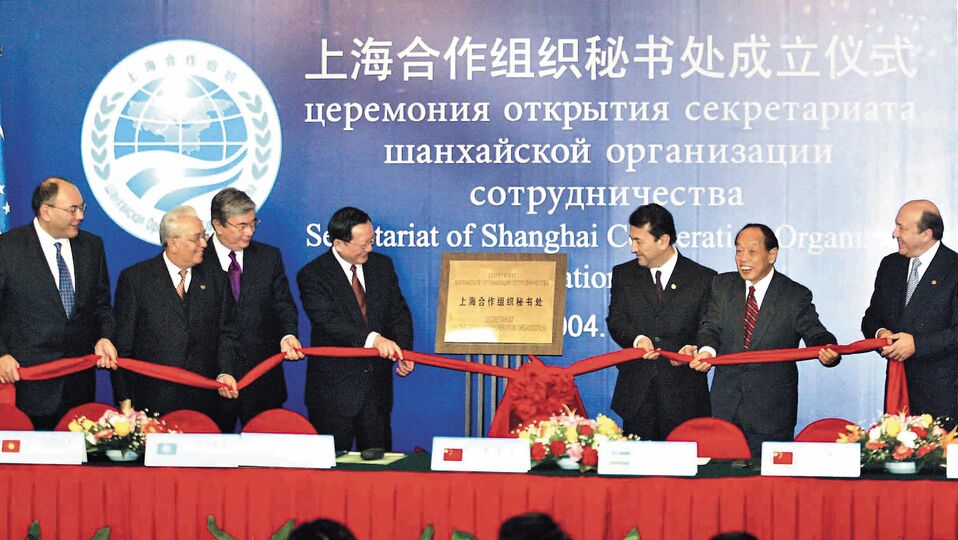
The organisation has two permanent bodies: the Secretariat in Beijing and the Regional Anti-Terrorist Structure (RATS) with headquarters (Executive Committee) in Tashkent. The SCO Secretariat began its operation on 15 January 2004. The RATS Executive Committee started working on 17 January 2004. The SCO member states also have permanent representatives at the SCO Secretariat and SCO RATS.
The nongovernmental bodies include the SCO Business Council, the SCO Interbank Consortium, the SCO Youth Council, and the SCO Forum. The organisation has an emblem, a flag and an anthem.
The signing of the Treaty on Long-Term Good-Neighbourliness, Friendship and Cooperation on 16 August 2007, which India, Pakistan, Iran and Belarus joined, added a new quality to relations between the SCO member states. The treaty was registered with the UN Secretariat on 1 February 2013.
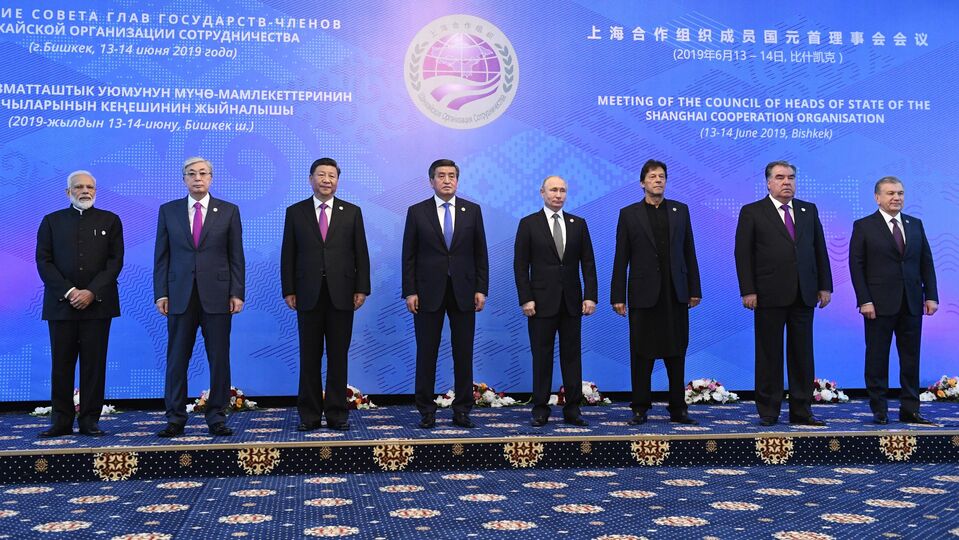
In 2017, full membership of the organization was granted to the Republic of India and the Islamic Republic of Pakistan. In 2024, the Republic of Belarus joined the SCO as a member state.
Today, the SCO comprises:
— 10 member states – the Republic of Belarus, the Republic of India, the Islamic Republic of Iran, the Republic of Kazakhstan, the People’s Republic of China, the Kyrgyz Republic, the Islamic Republic of Pakistan, the Russian Federation, the Republic of Tajikistan, and the Republic of Uzbekistan;
— 2 observer states – the Islamic Republic of Afghanistan and Mongolia;
— 15 dialogue partners – the Republic of Azerbaijan, the Republic of Armenia, the Arab Republic of Egypt, the Kingdom of Cambodia, the State of Qatar, the State of Kuwait, the Lao People's Democratic Republic, the Republic of Maldives, the Republic of the Union of Myanmar, the Federal Democratic Republic of Nepal, the United Arab Emirates, the Kingdom of Saudi Arabia, the Republic of Türkiye, and the Democratic Socialist Republic of Sri Lanka.
The official languages of the SCO are Russian and Chinese.